New Zealand International Convention Centre (NZICC)
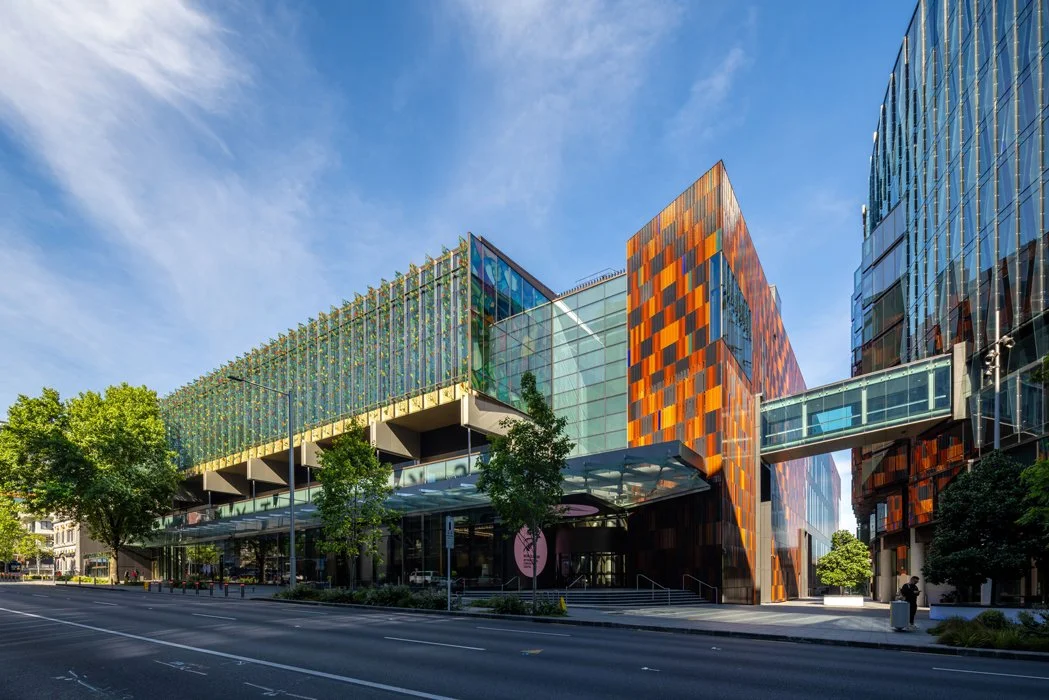
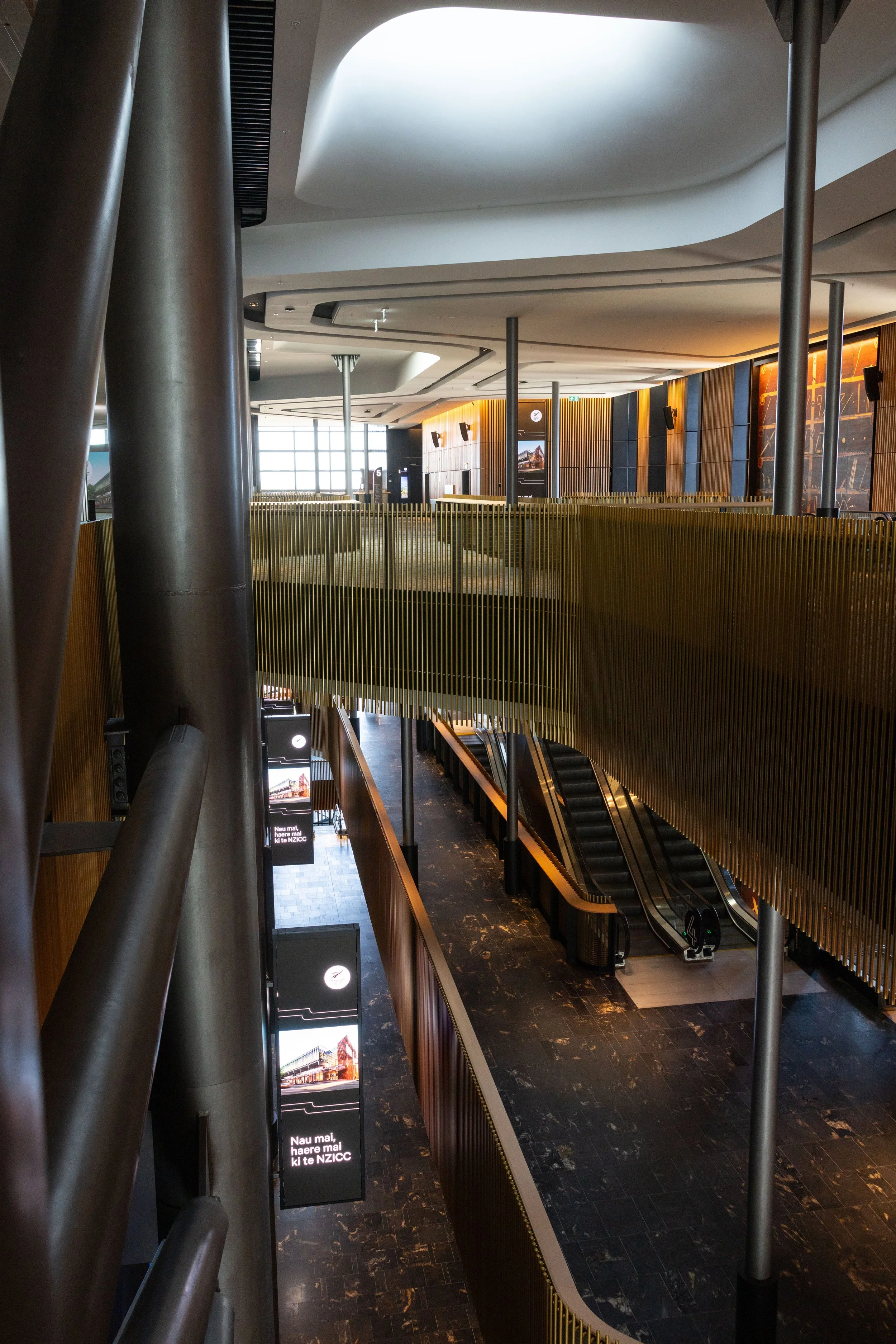
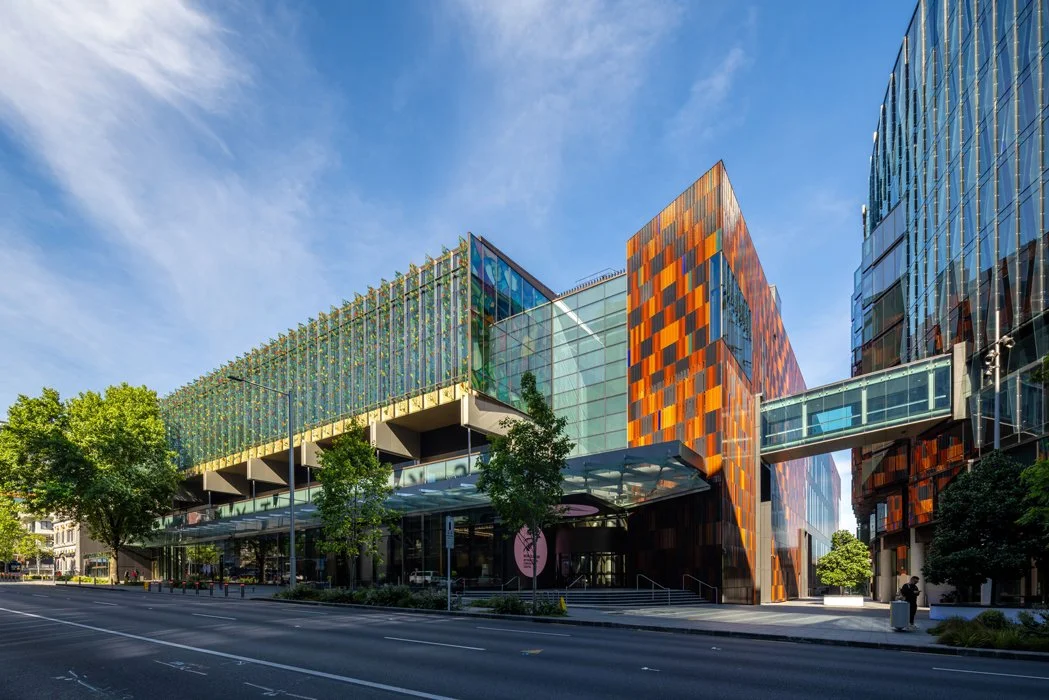
The New Zealand International Convention Centre (NZICC) is New Zealand's largest purpose-built convention facility, capable of hosting 4,000 delegates across a full convention programme or multiple concurrent events.
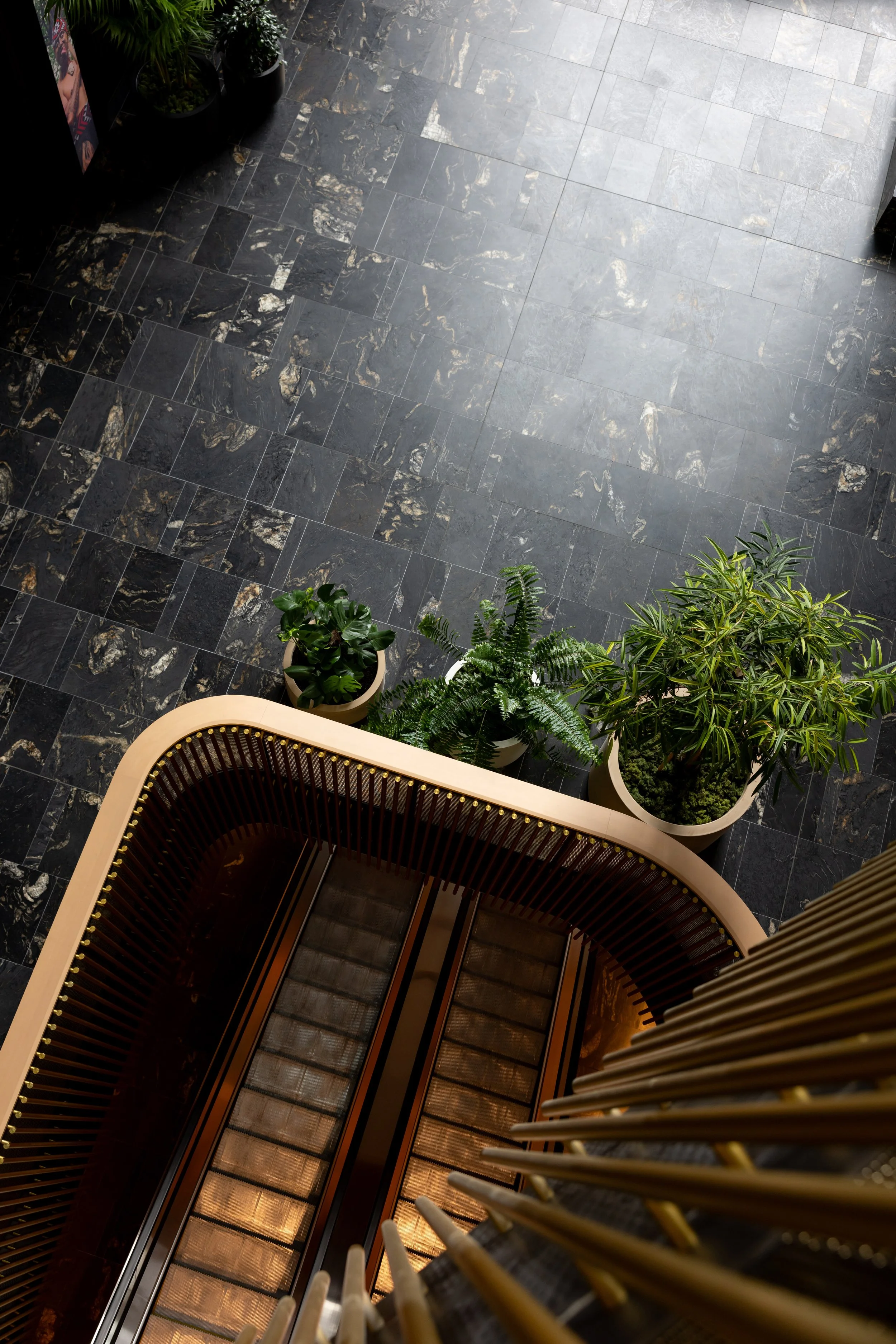
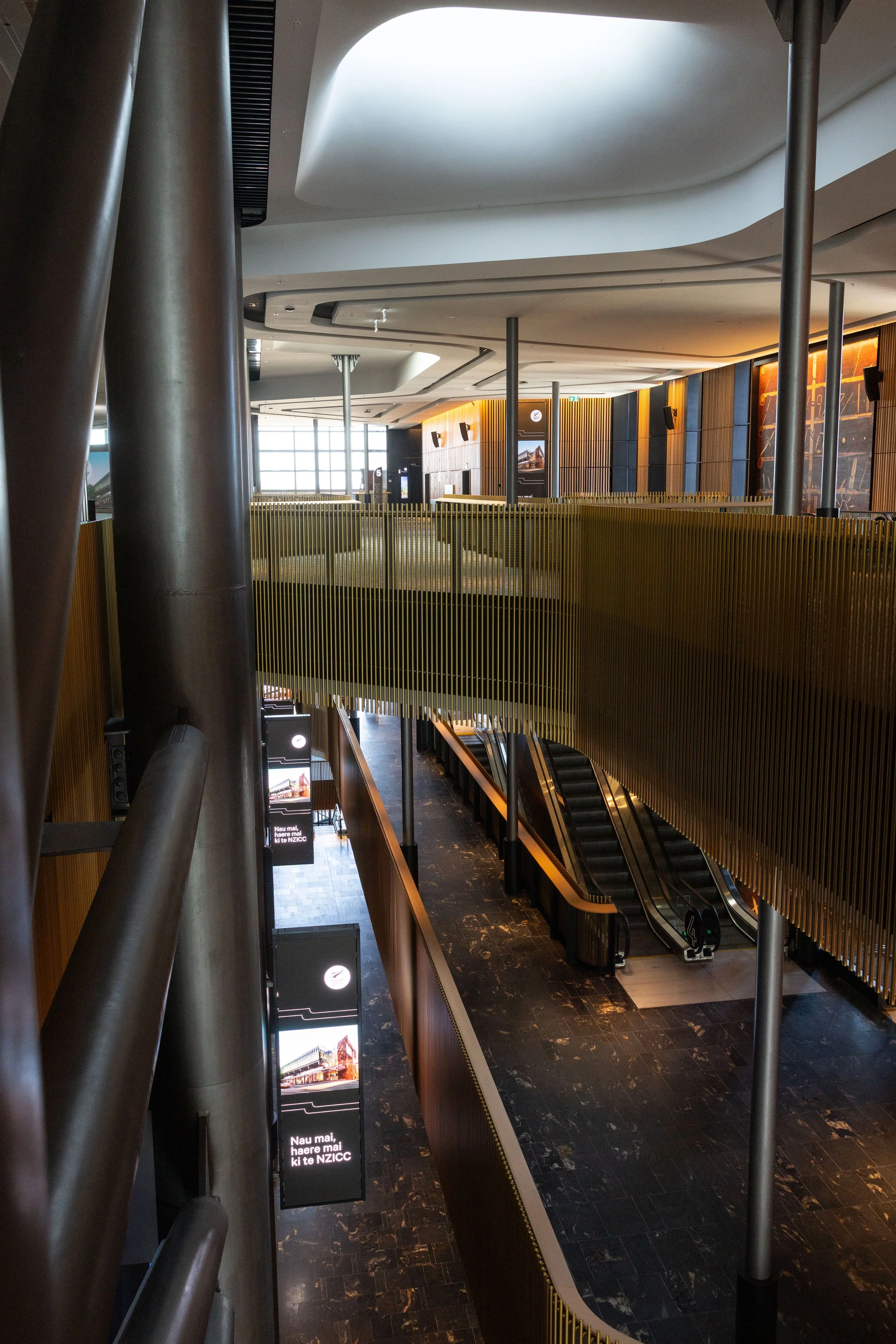
The four-storey building with four basement levels of car parking occupies a full city block by Hobson, Wellesley, and Nelson Streets. Key spaces include a Plenary Hall, a large Exhibition Hall that can be divided into multiple function areas, a ballroom, a suite of meeting rooms, public pre-function circulation, offices, and back-of-house facilities.
CLIENT
New Zealand International Convention Centre Limited
LOCATION
Auckland, New Zealand
COMPLETED
2025
our Scope
MDA provided acoustic consultancy from concept design through to construction completion and continued our involvement following the building fire that delayed the project's opening.
Our scope included:
Acoustic assessment for Resource Consent covering operational noise emissions and construction noise and vibration
Design reports addressing sound insulation, room acoustics, façade performance, rain noise, and mechanical services noise
Design of double operable wall systems for the Exhibition Hall and Plenary to enable flexible subdivision while maintaining acoustic separation
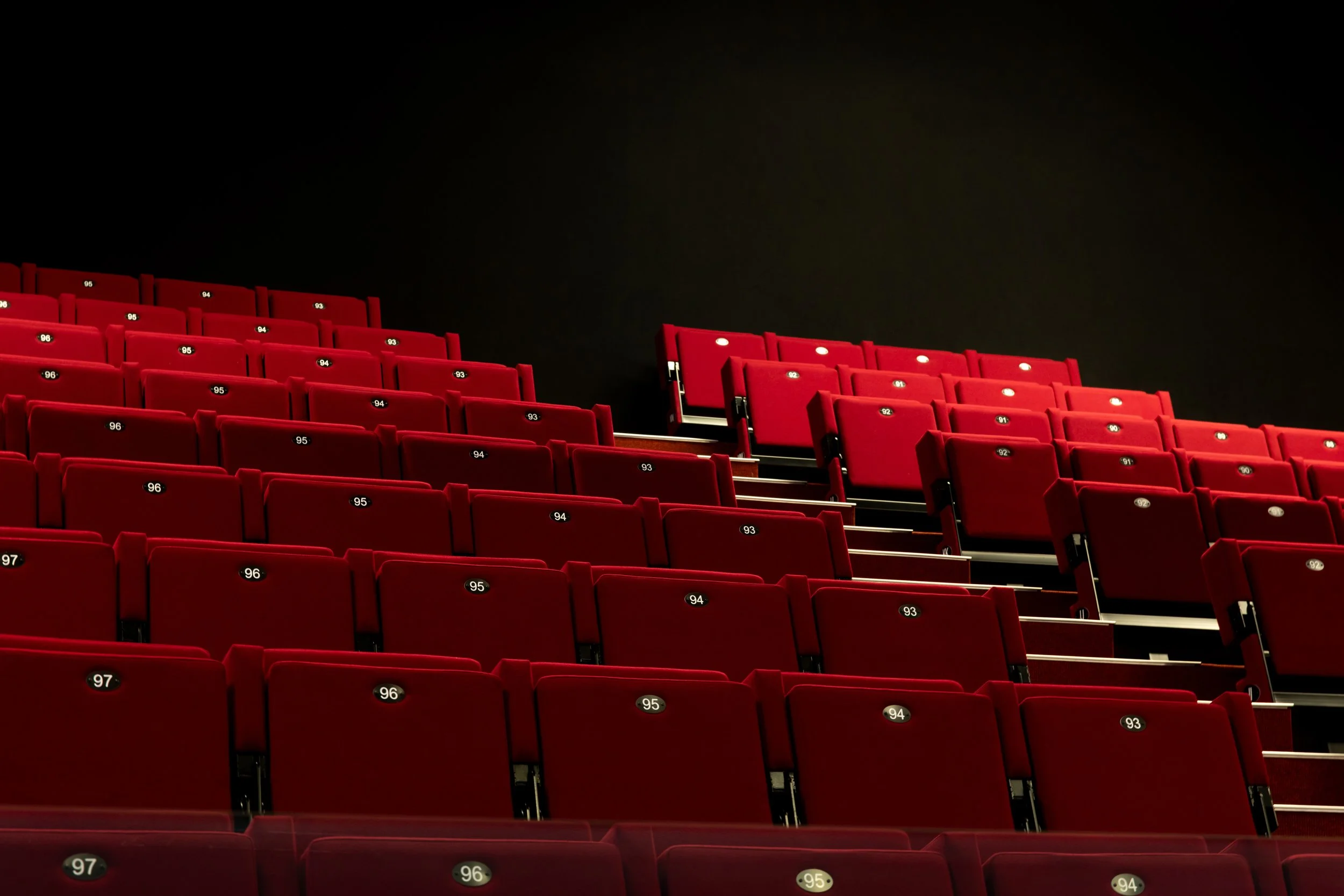
Plenary Hall room acoustics design, including placement of reflective and absorptive surfaces for speech clarity under amplified sound conditions
Detailed mechanical services acoustic specification
Post-fire reinstatement acoustic inspections and advice, including review of rebuilt partitions, operable wall head details, VAV lagging, penetration sealing, and AHU vibration isolation
CHALLENGES
Construction immediately adjacent to a television news studio.
The building includes 5 levels of basement car parking which required impact piling and excavation adjacent to a television recording studio with low background noise requirements. Trial piling and extensive noise and vibration monitoring were undertaken to establish a practicable construction methodology without giving rise to disturbance when the studio was in use.Designing for 2,700 delegates with total acoustic flexibility.
The Plenary needed to function as a single large space or for two independent events running side by side. The Exhibition Hall also is designed to support a number of concurrent events operating simultaneously. This required a double operable wall system capable of maintaining meaningful acoustic separation between concurrent events — a technically demanding outcome given the inherent performance limitation of operable wall seals and head details. We specified partition performance across the full range of configurations and provided detailed design guidance on above-wall baffle construction to prevent flanking.Speech clarity in a large Plenary Hall.
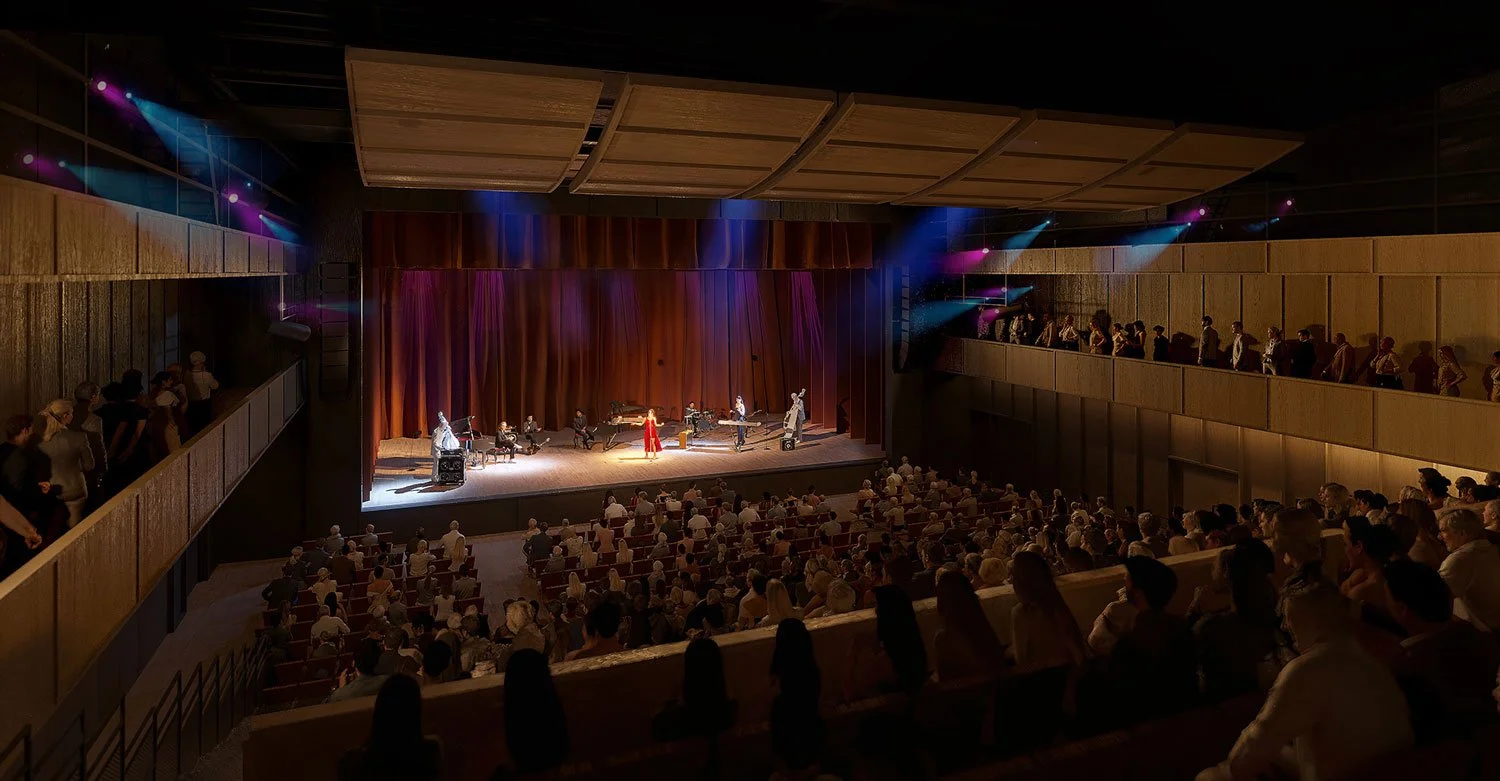
The Plenary Hall presented significant room acoustic challenges: a high ceiling, hard surfaces, and the need for excellent speech intelligibility under amplified sound conditions for up to 2,700 people. We designed the acoustic treatment around a reverberation time of less than 1.3 seconds, balancing absorptive finishes against strategically placed reflective surfaces to support early sound reflections to the audience. The lightweight Plenary roof also had to meet a rain noise criterion and prevent both noise ingress and egress to permit both quiet and loud noise events.Post-fire reinstatement.
A major fire during construction in 2019 caused significant damage and delayed the project's opening. As construction resumed, we inspected reinstated acoustic works. Re-designed systems where original equipment was no longer available. Reviewing rebuilt partitions, operable wall head details, VAV lagging, penetration sealing, and mechanical services vibration isolation to confirm the rebuilt works met the original design intent.
Awards
2026 World Architecture Festival - Completed Projects - Civic and Community - FInalist
2026 Te Kāhui Whaihanga New Zealand Institute of Architects - Auckland - Public Architecture
2026 Te Te Kāhui Whaihanga New Zealand Institute of Architects - Auckland - Interior Architecture
2026 Property Council New Zealand - Property Industry Awards - Tourism & Leisure Property - Best in Category
2026 Property Council New Zealand - Property Industry Awards - Civic, Health & Arts Property - Excellence
2026 Home of Architecture Interior Awards - Civic Interior of the Year
2019 World Architecture Festival Awards - Future Project Civic - Finalist
PROJECT TEAM



RELATED PROJECTS